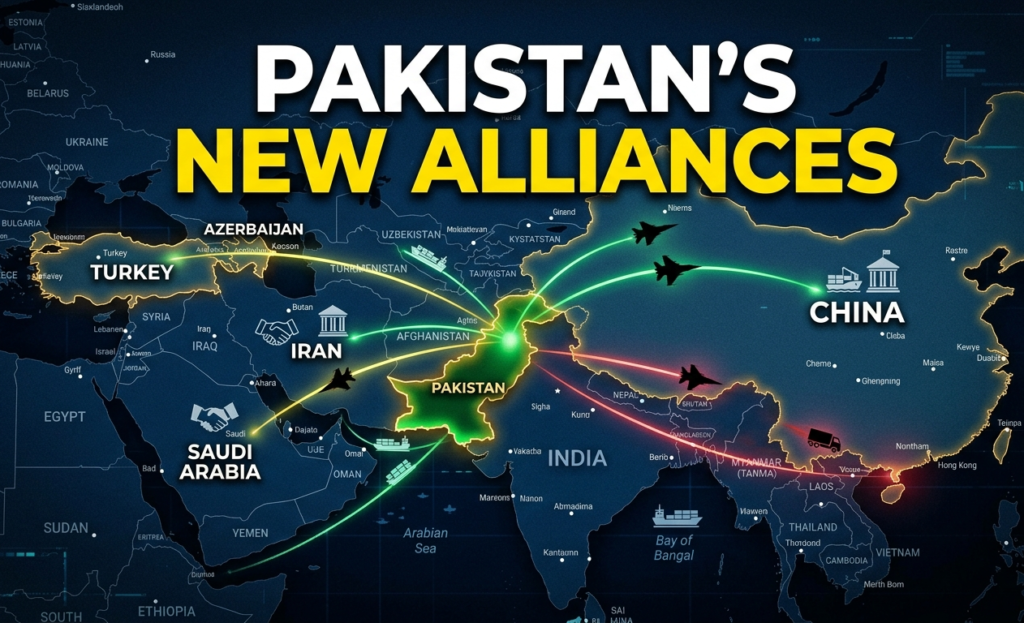
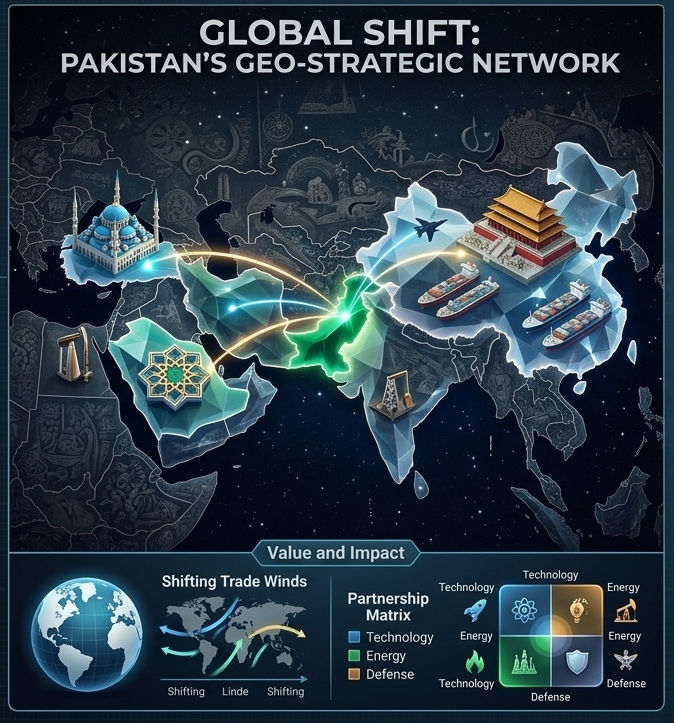
Pakistan’s foreign policy is going through a visible change, and this change is not small. For many years, Pakistan was mostly seen through the lens of its relationship with the United States, India, and Afghanistan. But now, the country is trying to build a wider network of allies, especially with China, Turkey, Azerbaijan, Saudi Arabia, Iran and even Russia.
This shift matters because South Asia is already one of the most sensitive regions in the world. India and Pakistan are nuclear-armed neighbours, China has its own border tensions with India, and the Middle East is again becoming a major security concern. In this situation, Pakistan’s growing diplomatic and military partnerships could have a long-term impact on regional politics.
Pakistan and China: The Most Important Partnership
The strongest pillar of Pakistan’s foreign policy today is its relationship with China. The China-Pakistan Economic Corridor, commonly known as CPEC, remains one of the biggest symbols of this partnership. It connects Pakistan’s infrastructure, ports, energy projects and trade routes with China’s larger Belt and Road vision.
But the relationship is not only about roads and trade. Defence cooperation between Pakistan and China has also grown strongly. One major example is the JF-17 Thunder fighter jet, which is jointly developed by Pakistan and China. The aircraft has become important for Pakistan’s air force and also for its defence exports.
Reports have noted that JF-17 aircraft are already connected with countries such as Nigeria, Myanmar and Azerbaijan, showing that Pakistan is slowly building its image as a defence exporter, even if its share in the global arms market is still limited.
Turkey and Azerbaijan: Support Beyond Words
Pakistan’s ties with Turkey and Azerbaijan have also become more visible in recent years. These countries share close political, defence and cultural ties with Pakistan. Turkey has often supported Pakistan on issues like Kashmir, while Pakistan has supported Azerbaijan on the Nagorno-Karabakh issue.
This kind of relationship gives Pakistan more diplomatic space. It also helps Islamabad show that it is not isolated in regional politics. During tense moments between India and Pakistan, support from friendly countries becomes important, not only militarily but also in shaping global opinion.
Operation Sindoor, which took place during the India-Pakistan conflict from May 6 to May 10, 2025, became one of those moments where regional alignments were closely watched by analysts. Carnegie described the conflict as an important episode with several military lessons for India and Pakistan.
Saudi Arabia and Iran: A Careful Balancing Act
Pakistan’s relations with Saudi Arabia have always been important because of religion, energy, remittances and defence links. Millions of Pakistanis work in Gulf countries, and Saudi Arabia remains a key economic partner for Pakistan.
At the same time, Pakistan has also tried to improve its relationship with Iran. This is not always easy because Saudi Arabia and Iran have had a long history of rivalry. But Pakistan’s location makes Iran important for border security, trade and regional stability.
If Pakistan manages this balance carefully, it can become a bridge between different power centres in the Muslim world. But if regional tensions rise, Islamabad may also face pressure to pick sides, which could be risky.
The Strait of Hormuz and Pakistan’s Regional Importance
The Strait of Hormuz is one of the most important oil routes in the world. Any crisis there affects global energy prices, shipping and regional security. Recently, Western and regional countries have been discussing ways to secure the Strait because of rising tensions around Iran and shipping routes.
The UK and other countries have taken interest in maritime security efforts around the Strait of Hormuz, with reports of multinational discussions and possible deployments to protect shipping.
Pakistan is not the main player in the Strait of Hormuz crisis, but it is still located close enough to matter. Its ties with Iran, Saudi Arabia, China and the Gulf states give it a unique position. This is why Pakistan’s view on regional security is becoming more relevant than before.
What This Means for India
India is watching these developments carefully. Pakistan’s stronger ties with China are already a major concern for New Delhi. When China and Pakistan cooperate on defence, infrastructure and diplomacy, India has to adjust its own strategy.
Kashmir remains the biggest flashpoint between India and Pakistan. Any increase in Pakistan’s diplomatic confidence can make this issue more complicated. At the same time, China’s position on Ladakh and its border tensions with India add another layer to the regional power struggle.
India has strong partnerships of its own, especially with the United States, France, Israel and other Western countries. But Pakistan’s growing network shows that the balance in South Asia is no longer simple. It is becoming more multipolar, with many countries trying to protect their own interests.
A Changing World Order
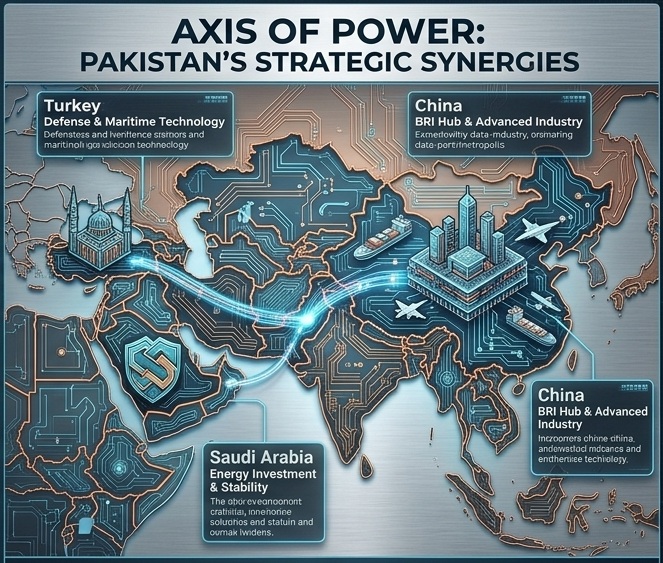
The world is slowly moving away from a single-superpower system. The United States is still very powerful, but China, Russia, the Gulf states and regional alliances are becoming more active. Pakistan seems to understand this shift and is trying to avoid depending on only one major power.
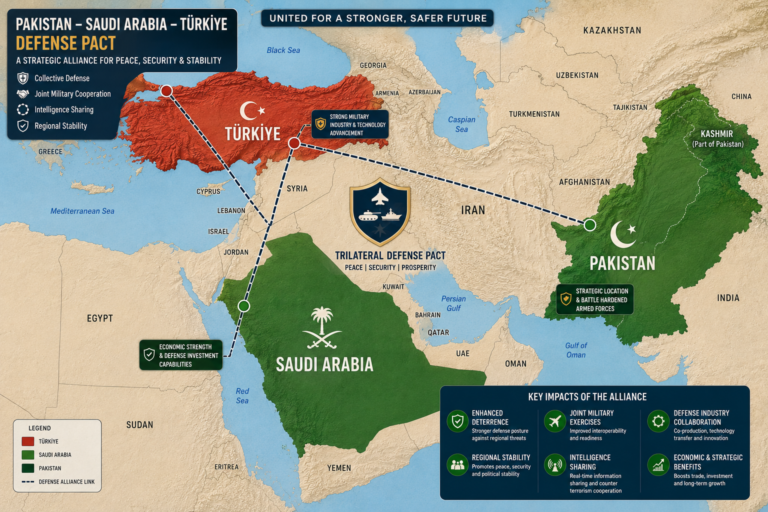
By improving ties with China, Turkey, Azerbaijan, Saudi Arabia, Iran and Russia, Pakistan is trying to create more options for itself. This strategy may help Pakistan gain diplomatic weight, attract investment and improve its defence position.
However, this path also comes with challenges. Pakistan must manage economic pressure, internal political instability and security threats. Strong alliances can help, but they cannot replace domestic stability and consistent policymaking.
Pakistan’s strategic alliances are changing the way the country is viewed in South Asia and beyond. Its deep relationship with China, growing defence exports, stronger ties with Turkey and Azerbaijan, and careful balancing between Saudi Arabia and Iran all point toward a new foreign policy direction.
For India, this creates new strategic calculations. For the wider region, it shows that Pakistan is trying to position itself as a more active player in the emerging world order.
The coming years will show whether Pakistan can turn these alliances into real economic and diplomatic strength. But one thing is clear: Pakistan’s role in South Asian geopolitics is becoming harder to ignore.
About The Author